Data Protection Hero: Congratulations on choosing a password that isn't just your dog's name
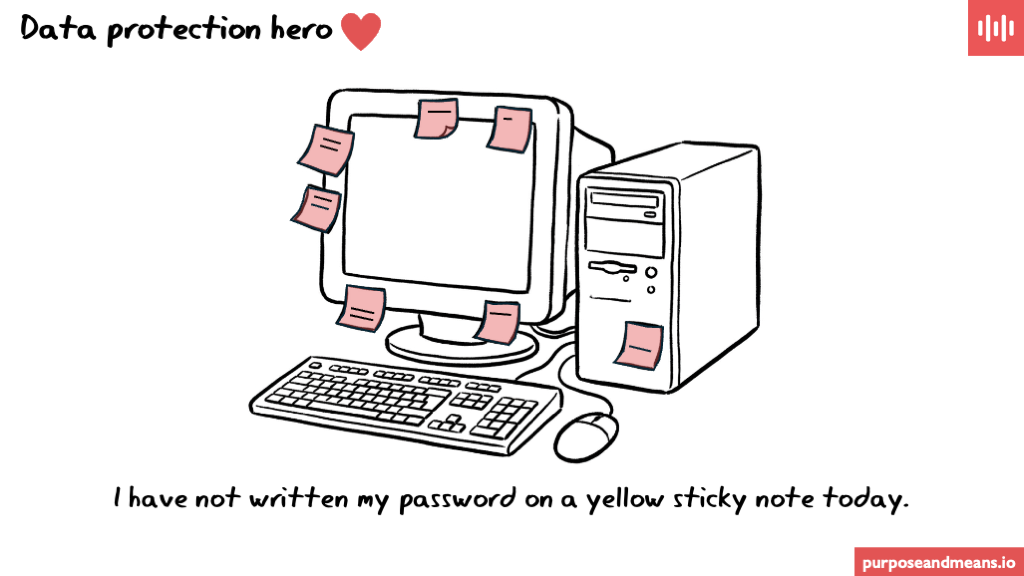
Weak passwords are one of the most common entry points for unauthorised access to personal data. Using a pet’s name, a child’s birthday, or a word that appears in a dictionary gives attackers very little work to do. Choosing something harder to guess is a small decision with a disproportionately large impact on data security — and under GDPR Article 32, companies are expected to apply appropriate technical and organisational measures to protect personal data. A strong password policy is exactly that.
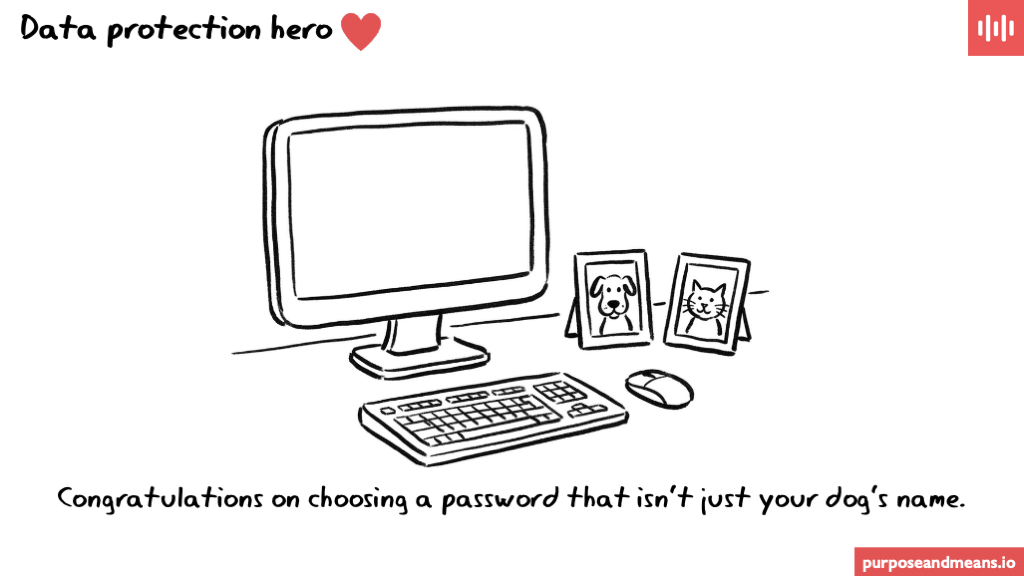
Weak passwords are one of the most common ways that accounts get compromised, and pet names are near the top of the list. They are easy to guess, often shared on social media, and feel personal enough that people assume no one else would think of them. Someone would think of them. You have chosen something else. This is noted.
Why it matters more than you think #
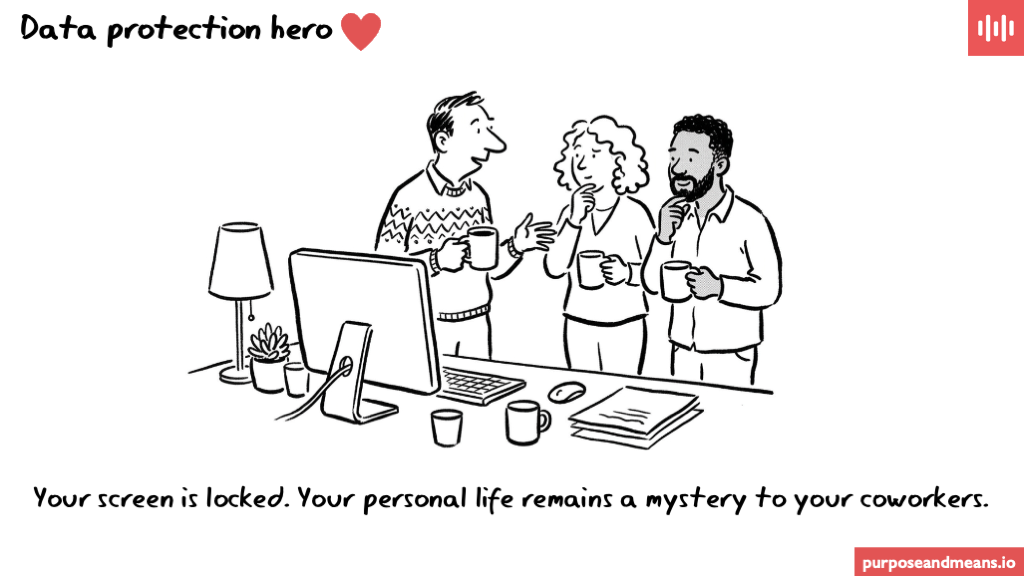
A weak password is not just a personal risk — it is a business one. If your account is compromised because your password was guessable, the consequences extend to every system you have access to. That can include HR records, customer data, financial information, or health records belonging to colleagues. The person whose data is exposed did not choose your password. They had no say in the matter at all.
And don’t forget passwords for your personal devices, applications and services.
Data protection authorities across Europe have cited inadequate access controls — including poor password practices — in enforcement actions. The Norwegian Data Protection Authority (Datatilsynet) and others have made clear that credential security is a baseline expectation under the GDPR, not an advanced requirement.
The practical fix #
A strong password is long, random, and unique to each account. The most practical way to achieve this is a password manager, which generates and stores complex passwords so you do not have to remember them. Most companies now have one available to staff — if yours does not, it is worth raising.
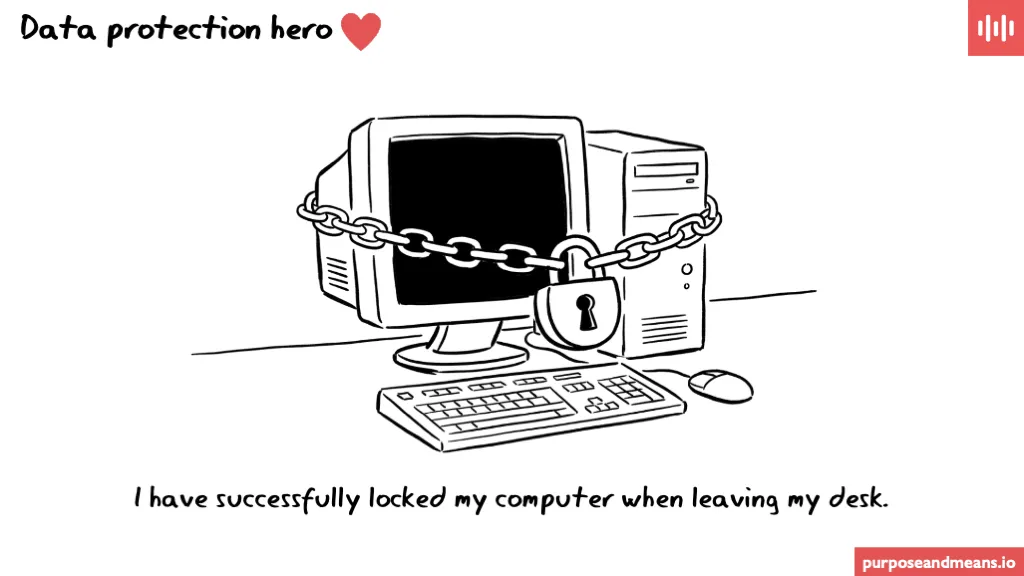
For companies, the stronger approach is to enforce password complexity requirements and multi-factor authentication (MFA) through identity management systems. MFA means that even a compromised password alone is not enough to gain access. That removes the single point of failure that a weak password creates.
Frequently Asked Questions #
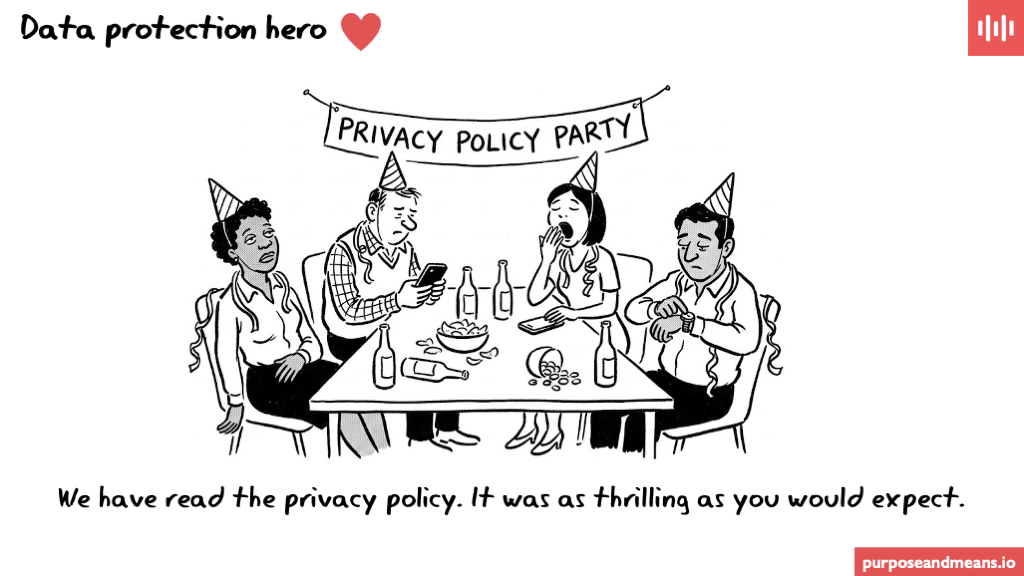
Is a strong password a GDPR requirement? GDPR Article 32 requires appropriate technical and organisational measures to protect personal data. Password policies are widely regarded by Supervisory Authorities as a baseline access control measure. A company that relies on users choosing their own passwords with no complexity requirements would struggle to demonstrate compliance in an enforcement context.
Why is a pet’s name a bad password? Pet names are predictable, publicly available — often on social media — and appear frequently in the dictionary lists that automated attack tools use first. A name that feels personal to you is, statistically, one of the first things an attacker will try.
What makes a password genuinely strong? Length matters more than complexity. A password of 16 or more random characters is significantly harder to crack than a short one with symbols added. A password manager generates and stores these for you, removing the need to remember them. Using a unique password for each account ensures that a breach in one system does not cascade into others.
#DataProtectionHero