Data protection leaders are overloaded. What needs to change?
Data protection leaders are increasingly overwhelmed by regulatory complexity and operational burdens, necessitating a shift from compliance-focused roles to strategic business enablers, supported by advanced tools and resources to unlock their full potential.
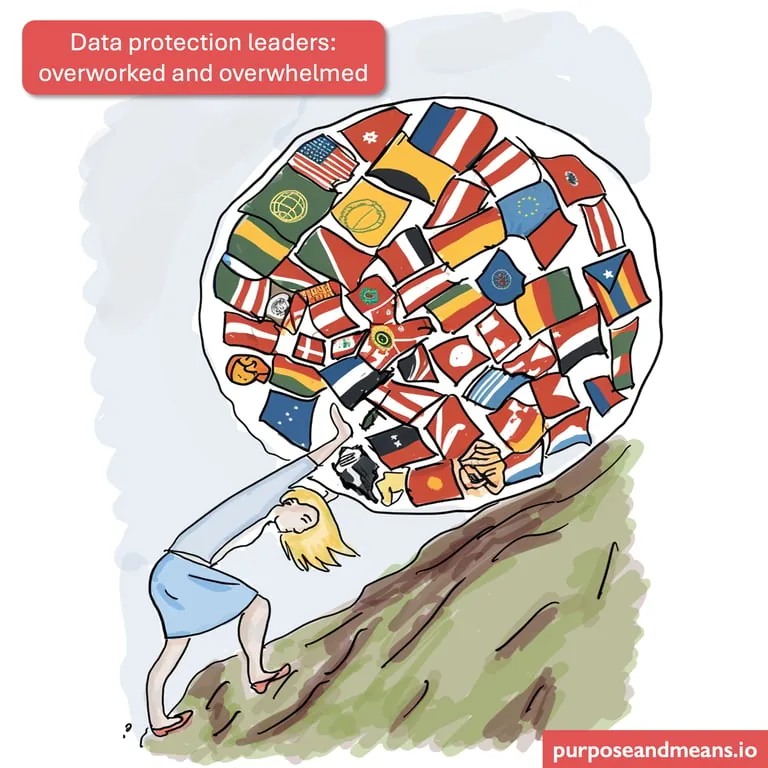
‘Overloaded’ has been a common remark I’ve heard from many data protection leaders for quite some years. However, it seems that the role has grown increasingly complex, leaving many leaders overwhelmed by mounting responsibilities and many are struggling.
Why data protection leaders are drowning in regulatory complexity and operational burdens #
The proliferation of data protection and privacy laws worldwide has created a labyrinth of regulations that leaders must navigate. The GDPR is a comprehensive framework in itself that demands meticulous oversight especially it’s interplay with other applicable laws and regulations like the ePrivacy Directive, local employment laws, marketing laws and relevant sector-specific laws. And then there’s the flood of laws resulting from the EC data, AI and cyber strategy that further complicate compliance efforts. Each law introduces unique requirements, timelines, and interpretations, forcing data protection leaders to juggle multiple frameworks simultaneously.
Operationally, leaders are tasked with conducting DPIAs, maintaining ROPAs, educating and training staff on contextual best practices, responding to data subject requests, monitoring and reporting to boards, to name a few tasks. The sheer volume of these responsibilities often exceeds the capacity of small data protection teams - and in many cases, the team is just the leader themselves. The ‘one-person data protection army.’
Adding to the burden is the challenge of enforcing requirements with powerful third parties like some of the bigtech players. Leaders often struggle to hold the large players to account due to imbalances in power dynamics. Also, ambiguity in new laws and insufficient guidance from the supervisory authorities exacerbate the problem, leaving leaders to figure out unclear requirements on their own. Without adequate support and tools, this complexity risks burnout among data protection leaders and jeopardises compliance efforts.
The shift from compliance-based roles to strategic ‘business enablers’ #
Traditionally seen as ’necessary evils’, the perception of data protection leaders is now changing to strategic business enablers, which is a much needed shift. Companies are now recognising that robust data protection is not just a legal necessity but can be a competitive advantage, if framed properly. By embedding Data Protection by Design and by Default considerations into product development and operations, leaders can help mitigate long-term strategic risks while building customer trust.
This shift requires data protection leaders to play a more proactive role in participating in business strategy processes. For example, they should influence product design decisions to ensure data protection safeguards are integrated from the outset. In regulated sectors like financial services and healthcare, where overlapping regulations such as DORA and NIS2 demand heightened cybersecurity measures, they must collaborate across departments to harmonise compliance efforts.
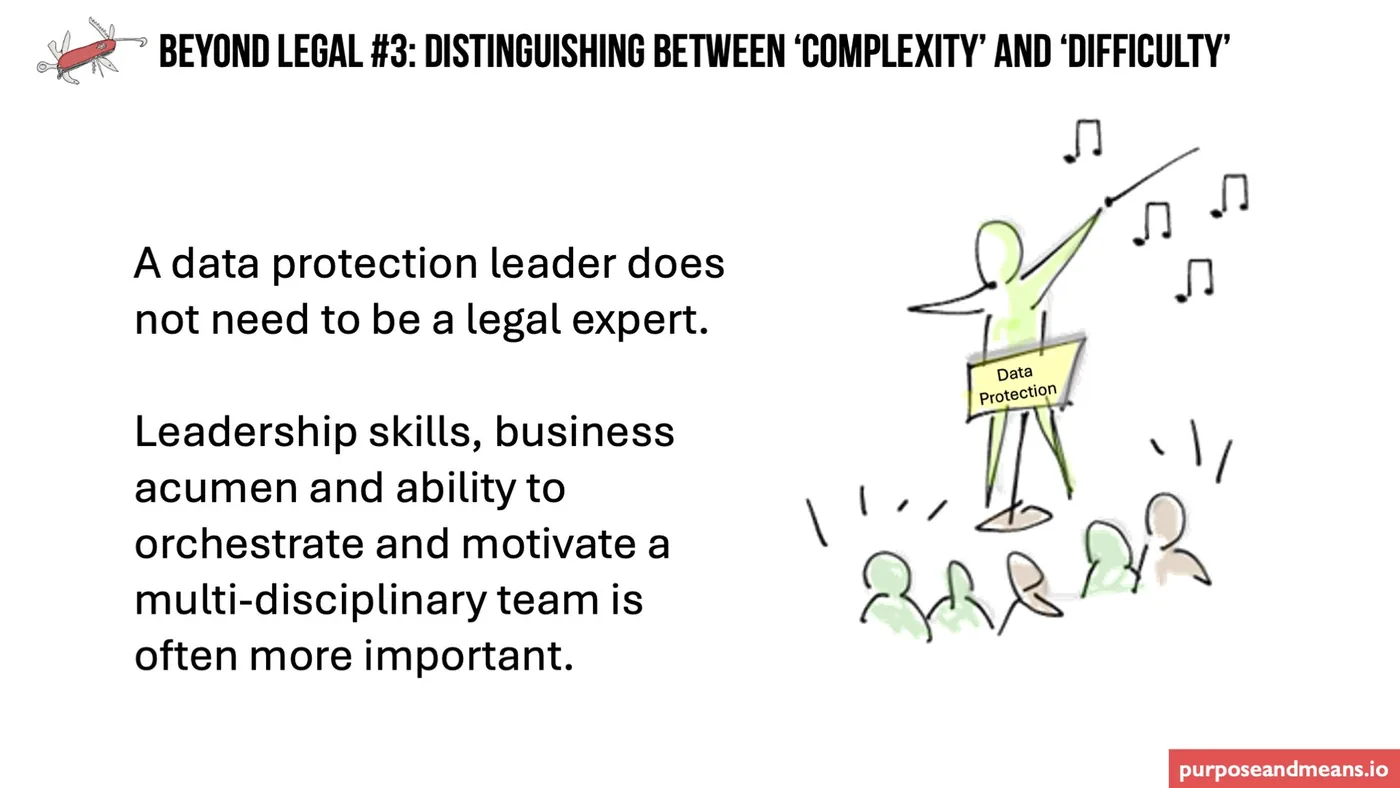
To succeed in this expanded role, data protection leaders need greater clout at the executive level and access to resources that will help execute their business-aligned strategies. As I mentioned earlier, this shift is long overdue but places more strain on leaders who lack a business, or strategic skillset and mindset.
How companies can support leaders with better resources and automation #
Given the complexity of their role, companoes must rethink how they support their data protection leaders. Emerging tools and automation technology offer solutions to alleviate operational burdens while enhancing efficiency.
The ‘privtech’ market is maturing with some long-established players are experiencing clients deserting their platforms to some of the new, more nimble players that streamline routine tasks like generating data flow maps, managing third-party vendor compliance. Also, robotic process automation (RPA) can handle repetitive data entry tasks with precision, freeing up leaders to focus on more strategic priorities. AI-powered analytics tools further assist by identifying risks and generating actionable insights from vast datasets.
Education and expertise #
Continuous education and training is essential for keeping leaders updated on emerging laws and regulations or ongoing interpretations of existing laws. Contextual training programmes can help data protection teams stay ahead of trends while improving their ability to implement effective safeguards.
Interdepartmental collaboration #
Strong communication channels between data protection leaders and other departments, e.g., IT, legal, and risk management, lines of business, etc., are essential. This collaboration ensures a joined-up approach to compliance while reducing inefficiencies caused by siloed operations.
Support from the top #
Perhaps most importantly, companies must empower data protection leaders with executive backing. This includes granting them decision-making authority in high-level discussions and ensuring sufficient staffing within for their teams. When supported adequately, leaders can shift from reactive firefighting to proactive strategy-building.
The future of data protection: a strategic imperative #
As the processing of personal data becomes even more pervasive - and acknowledged as fueling many businesses, the role of the data protection leader will only become more critical. Companies that invest in empowering their data protection teams stand to gain not only the ability to demonstrate compliance, but also enhanced trust among multiple stakeholder groups. Utilising automation tools, encouraging interdepartmental collaboration, and embedding data protection considerations upfront into operations will be key strategies.
By transforming data protection into a strategic advantage rather than a necessary evil, businesses can position themselves as leaders in an increasingly regulated digital environment, and ensure their data protection leader thrives rather than drown under the weight of responsibility.