
Every regulation your team is currently under pressure to respond to was visible before it arrived. AI Act implementation requirements. NIS2 scoping decisions. Cross-border enforcement trends. The signals were there - peripheral, easy to dismiss - months before they became urgent.
The data protection and GRC teams that were prepared for those changes weren’t necessarily better resourced or more capable. They had formed a view about the regulatory future before it became consensus - and acted on it while their peers were still watching.
By the time a regulatory development becomes something your team is scrambling to respond to, it has gone through several stages of visibility. It was a whisper long before it became a siren. Monitoring the same regulatory newsletters as everyone else gives you the same view as everyone else. That’s not a competitive position. It’s a shared blind spot.
Horizon scanning is how you move from the shared view to your own. A structured process for identifying, assessing, and acting on what’s developing - before it becomes obvious.
What horizon scanning gives you #
A view of the regulatory future that most of your peers don’t yet have - and enough lead time to act on it before they do.
Monitoring tells you what has been published. Scanning tells you what’s developing. Monitoring gives you enough notice to react. Foresight gives you enough time to prepare.
It answers three questions: What’s coming? What does it mean for us specifically? What do I need to decide, and when?
That picture becomes something you can take to leadership. Not a list of regulations to monitor - a considered position on what matters, when it lands, and what you need to do about it.
Who this is for #
Data protection leaders, DPOs, compliance officers, and risk managers who are responsible for keeping their company ahead of change - not explaining after the fact why they weren’t.
It’s particularly valuable when your programme spans more than one jurisdiction, when AI governance has landed in your remit alongside data protection, or when you’re expected to brief leadership on what to prepare for - not just what to respond to.
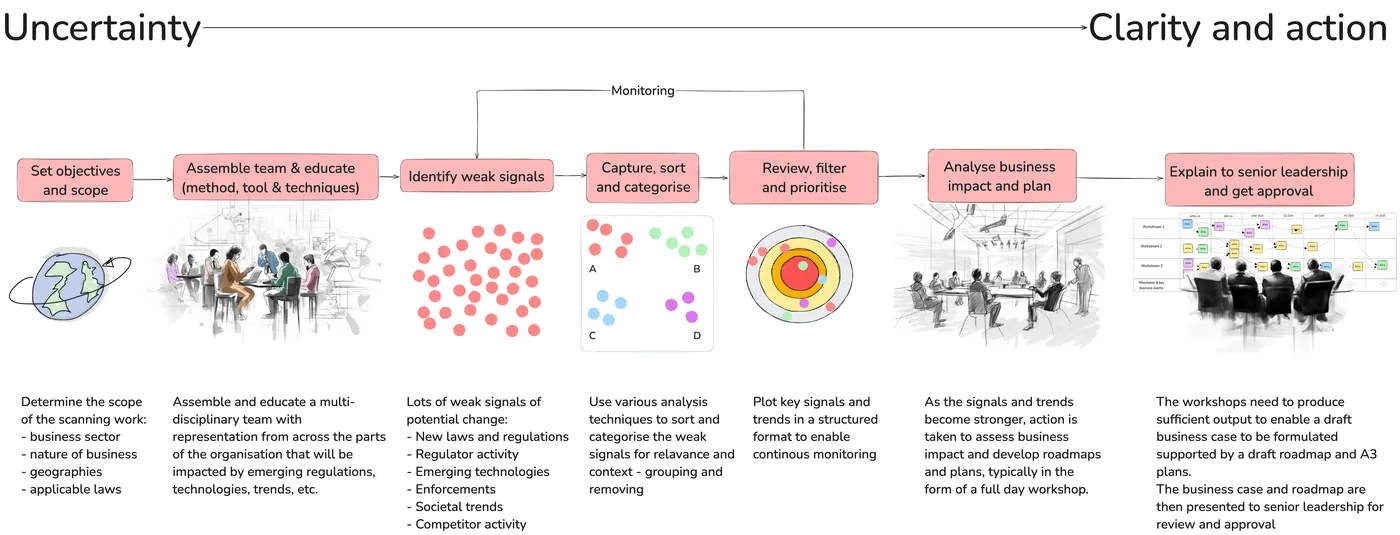
How I work #
Explore. I identify and prioritise the signals that matter for your specific situation - regulations in development, enforcement patterns, technology shifts, and developments from adjacent sectors that rarely show up in standard regulatory monitoring. The goal is to find what’s developing, not just what’s been published.
Anticipate. I evaluate what each development means for your programme - not a generic impact assessment, but a judgment about what’s probable, what’s possible, and what requires a decision now versus what can be tracked and revisited. I build interactive radar visualisations that make the landscape navigable and shareable with stakeholders.
Shape. I help you turn that picture into a position - what to address now, what to monitor, and what to brief leadership on. The output is a plan that reflects a considered view, not a compliance calendar.
Sample radars #
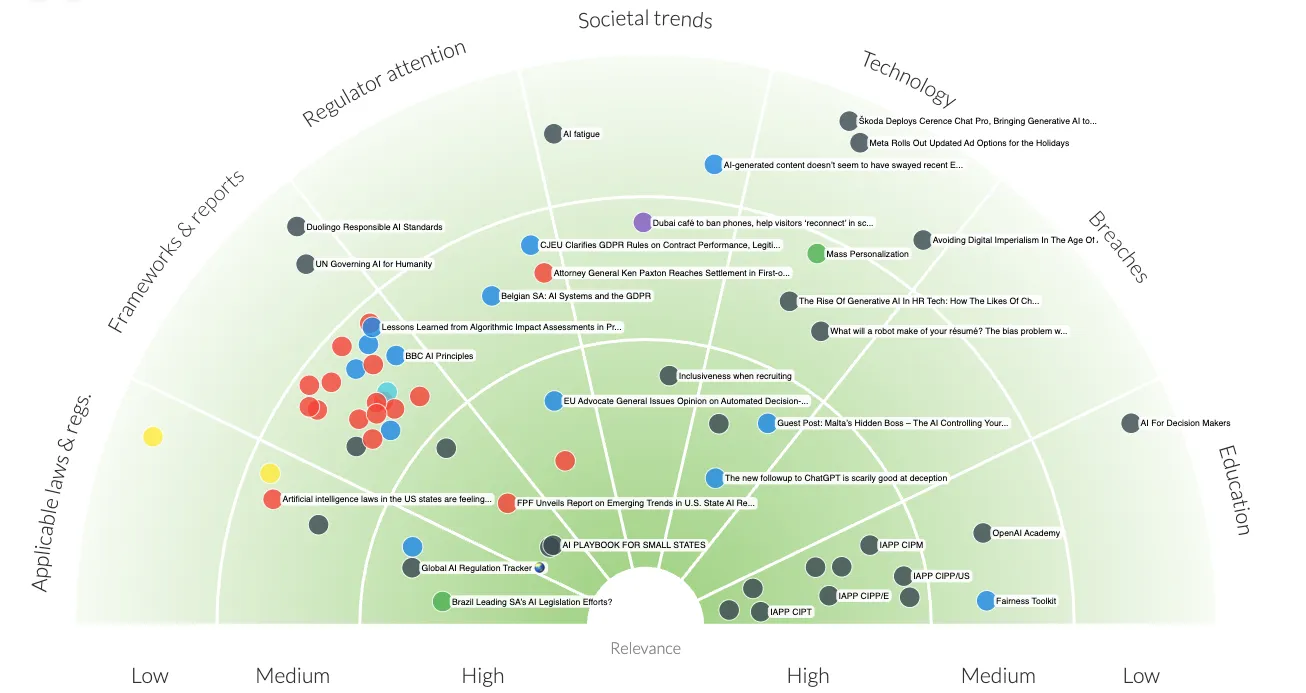
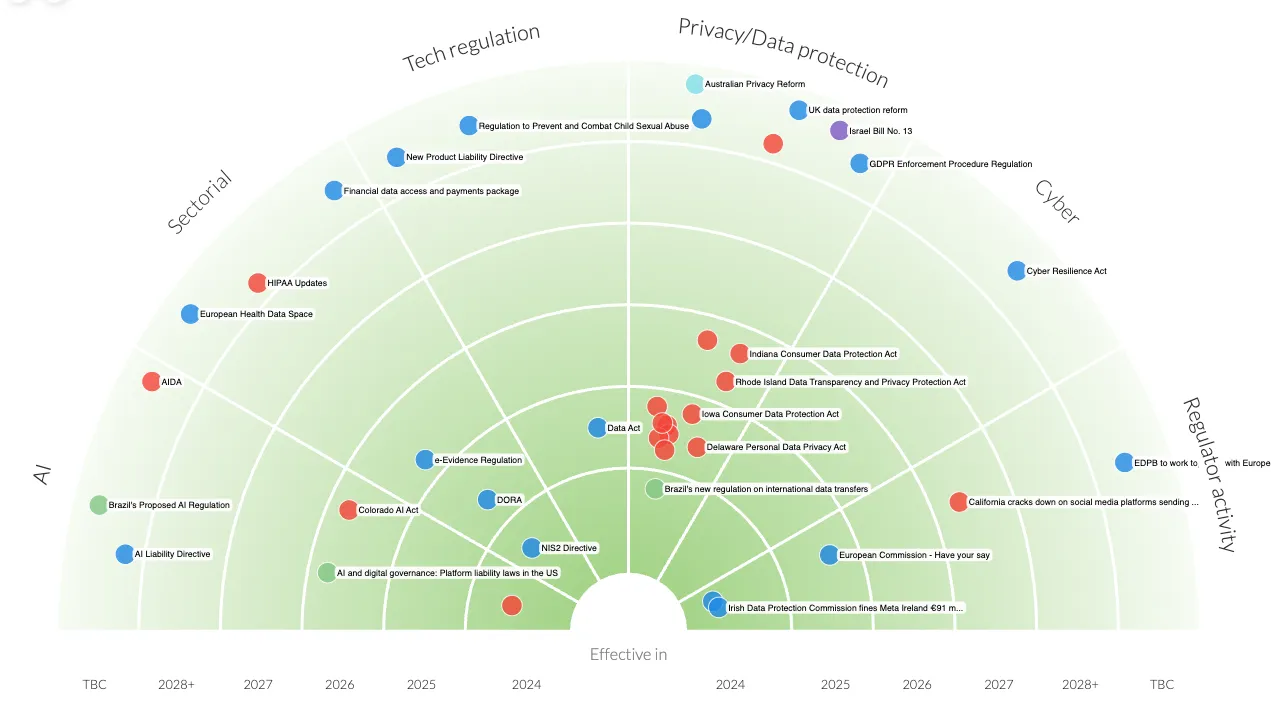
Here are a couple of sample radars to give you a sense of what the output looks like.
Two ways of working #
Full service. I run the end-to-end process - setting up your radars, conducting the analysis, and maintaining and updating them on an ongoing basis with regular interaction with you and your team.
Enablement. I get you started, then hand over to your team with support afterwards where needed. When the landscape shifts significantly, I’m there to help you respond.
Ready to get ahead of what’s coming? Book a call to discuss what horizon scanning would look like for your programme.
Frequently Asked Questions #
What is horizon scanning in a data protection context? #
Horizon scanning is a structured foresight process for identifying and analysing emerging regulations, enforcement trends, technology developments, and societal shifts that could affect your data protection programme. It moves your team from reactive compliance - scrambling when changes arrive - to proactive preparedness, with a considered view of what’s coming and what it requires.
How is this different from regulatory monitoring? #
Monitoring tracks what has already been published - regulations enacted, guidance issued, enforcement decisions taken. It’s useful, but it tells everyone in your field the same thing at the same time. No advantage there.
Horizon scanning looks further out, at what’s developing before it becomes formal. It builds a picture that’s specific to your programme, your sector, and your risk profile - not a shared view, but your own. That’s where the lead time comes from.
What tools do you use for horizon scanning? #
I build interactive radar visualisations that make complex trend data navigable and shareable with stakeholders. The radars are continuously updated and can be customised to your company’s specific risk profile and sector.
How often is the horizon scanning updated? #
This depends on your engagement model. In a full-service arrangement, I update your radars on an ongoing basis with regular check-ins. In an enablement model, I train your team to maintain the radars themselves, with my support available when needed.