Horizon scanning for beginners: Part 6 – building your roadmap: a practical guide to planning for change
Horizon scanning transitions from identifying weak signals to implementing actionable strategies by engaging key stakeholders to assess impacts, prioritise initiatives, and develop roadmaps that inform a robust business case for future-proofing your company.
Horizon scanning, as I’ve covered in this series, isn’t just about peering into the future, it’s about preparing for it. I’ve talked about identifying those faint signals, the symptoms of change on the horizon. But what happens when those signals increase, when the signals become trends, and the future starts to feel less like a distant possibility and more like an approaching reality? This is where the real work begins – the translation of foresight into action.
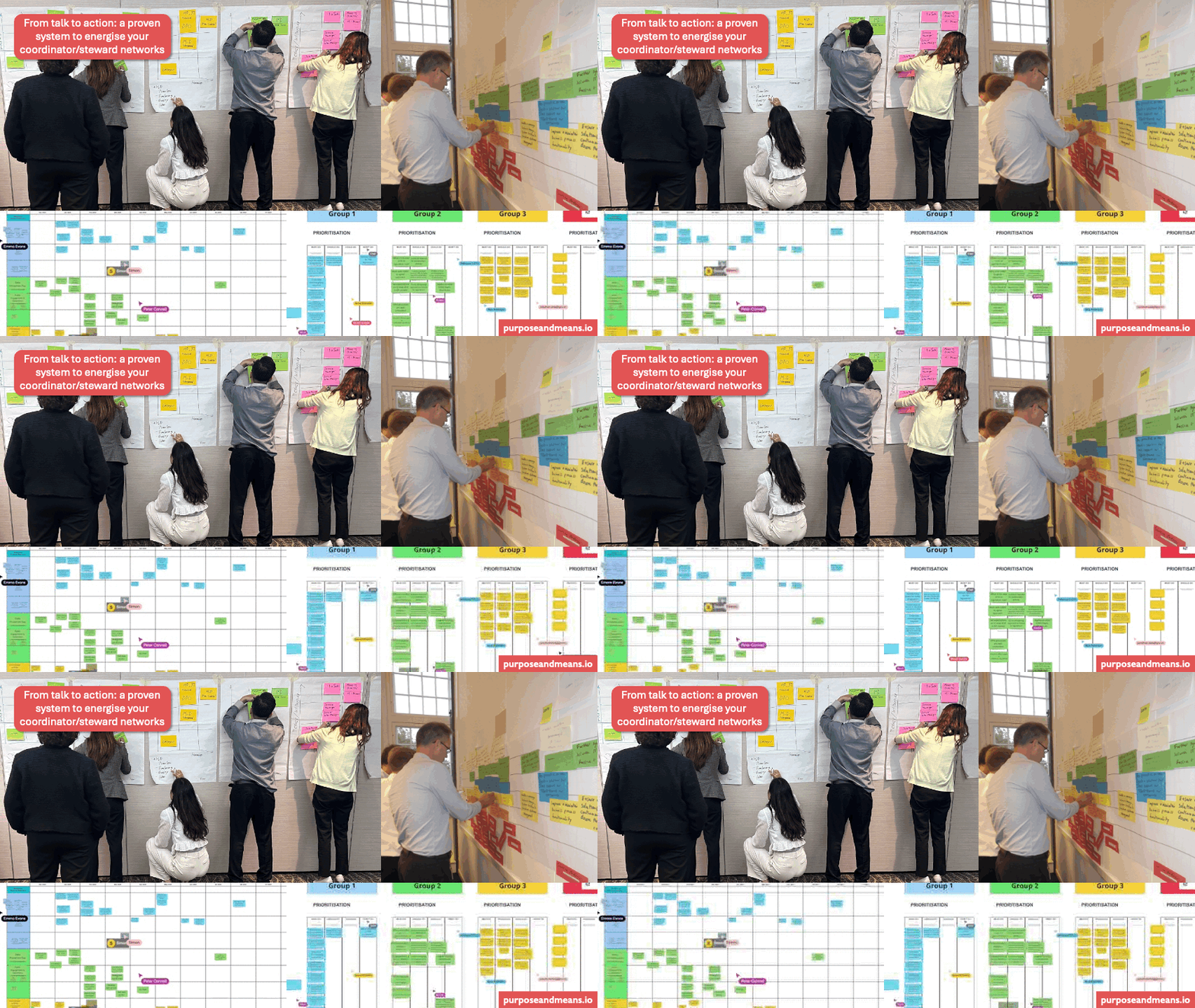
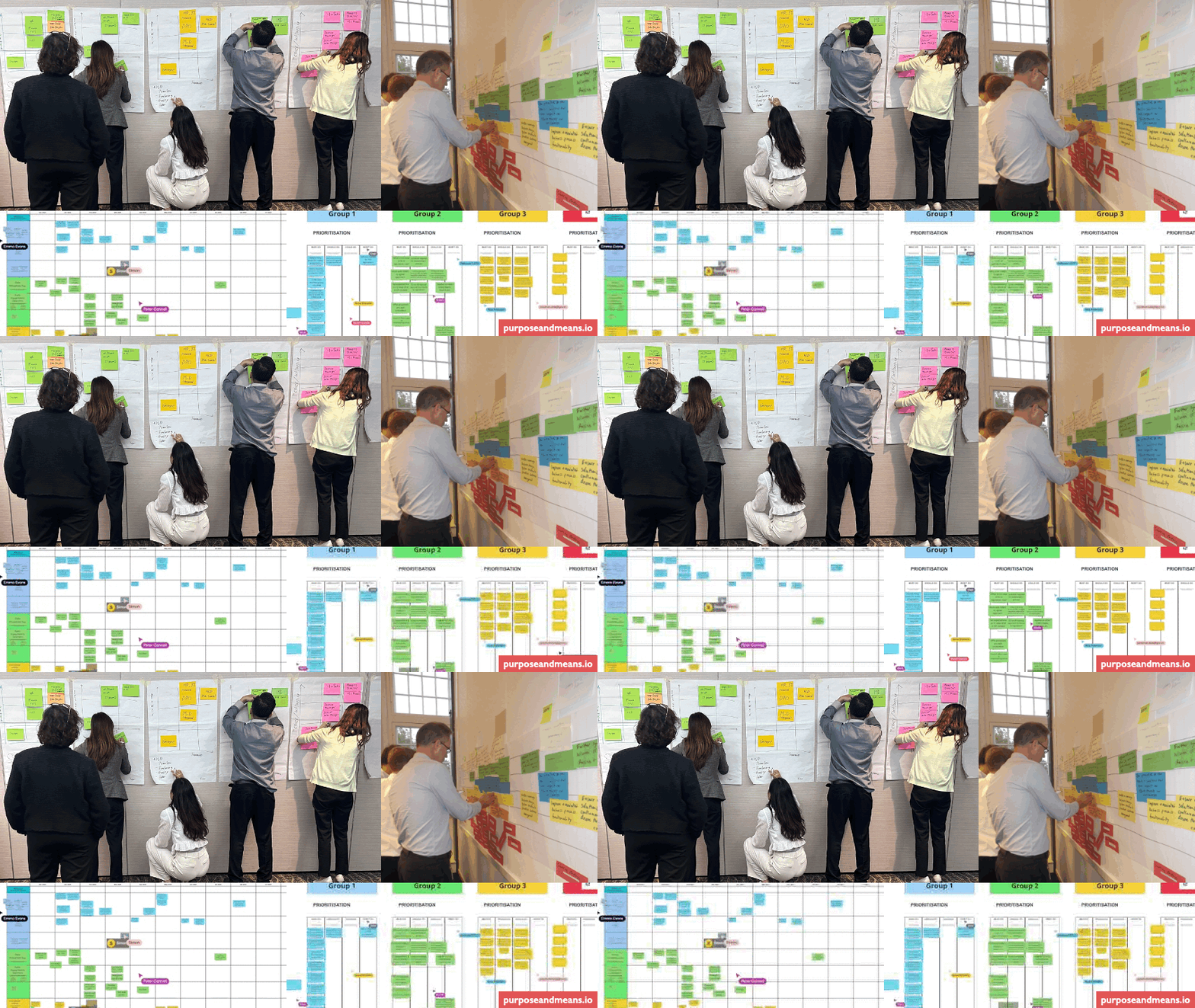
The transition from observation to implementation is critical. It’s not enough to simply acknowledge that change is coming; we need to understand its potential impact and develop concrete plans to navigate it successfully. This is where the power of collective intelligence comes into play. Bringing together key people from across the organisation – those with a vested interest in the changes ahead – is essential. It can be a virtual gathering, in-person or hybrid. These individuals possess a wealth of contextual knowledge, allowing us to assess the potential effects of change on various aspects of the business: processes, technology, people and organisation, and data and information.
Consider a hypothetical scenario: advancements in AI are identified as a significant trend impacting customer service. A horizon scanning exercise flags this up early. As the trend strengthens, it becomes clear that AI-powered chatbots could potentially handle a large percentage of routine customer inquiries. Now, the real work starts. A workshop is convened, bringing together representatives from customer service, IT, data analytics, and HR. The customer service team provides insights into current pain points and customer expectations. IT assesses the feasibility of integrating AI-powered chatbots into existing systems. Data analytics explores the available data for training the AI. HR considers the implications for workforce training and potential role changes.
This collaborative assessment reveals both opportunities and challenges. On the one hand, AI-powered chatbots could improve customer satisfaction, reduce response times, and free up human agents to handle more complex issues. On the other hand, there are concerns about privacy and data protection, the potential for bias in AI algorithms, and the need for ongoing monitoring and maintenance.
Prioritisation is a crucial element in this phase. We can’t tackle every potential impact simultaneously. Some changes will be more urgent, more impactful, or more feasible to implement than others. The workshop participants, drawing on their diverse perspectives, can help to prioritise the work, focusing on the initiatives that will deliver the greatest value and mitigate the most significant risks.
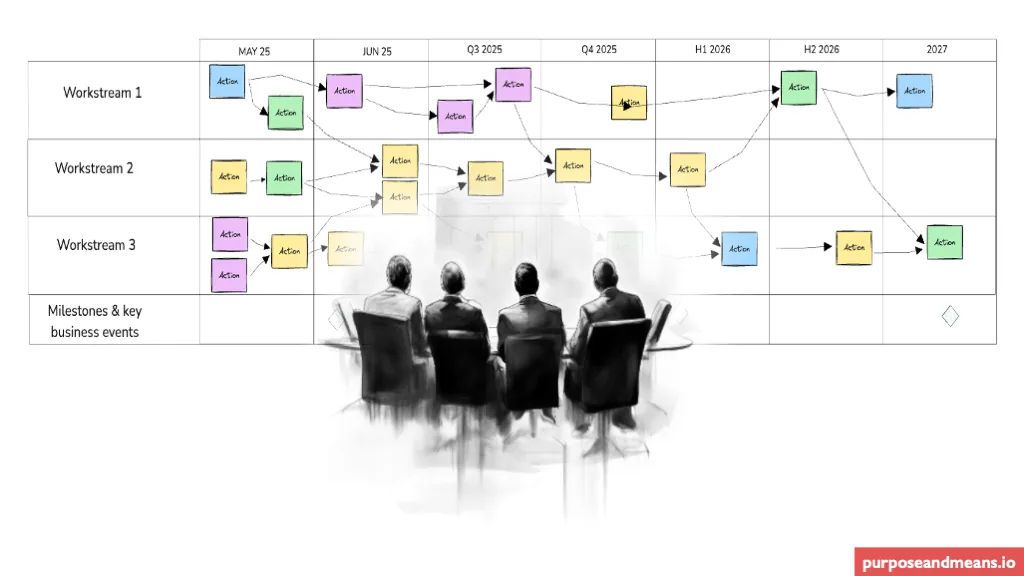
The workshop culminates in a set of key deliverables. A first-cut roadmap outlines the key steps involved in implementing the necessary changes. High-level descriptions of work packages break down the roadmap into manageable chunks. Registers for issues, risks, constraints, and assumptions provide a framework for managing potential roadblocks and uncertainties. All of this then feeds into the business case – the justification for the work. This business case answers the fundamental questions: Why is this change necessary? What needs to be done? How will it be implemented? When will it happen? Where will it take place? It’s the compelling narrative that secures buy-in from stakeholders and provides a clear direction for the organisation.
This process also offers some more subtle advantages. It establishes a culture of collaboration and shared understanding. By bringing together people from different departments and backgrounds, it breaks down silos and encourages a more holistic view of the business. It also promotes a sense of ownership and accountability. When people are involved in the planning process, they are more likely to be committed to the outcome.
However, there are also potential challenges to be aware of. Workshops can be time-consuming and resource-intensive. It’s important to ensure that they are well-facilitated and focused on achieving clear objectives. There’s also the risk of groupthink, where dissenting opinions are suppressed in favour of consensus. It’s crucial to create a safe space where people feel comfortable expressing their views, even if they challenge the prevailing wisdom. Successfully navigating these challenges requires strong leadership, effective communication, and a willingness to embrace diverse perspectives.
Let’s agree that horizon scanning isn’t just a theoretical exercise - it’s a practical discipline that requires planning, collaboration, and a commitment to action. It’s about translating foresight into tangible benefits for the organisation. The real value of horizon scanning lies not just in identifying future trends, but in the ability to proactively shape the future to your advantage.
In my penultimate post, I’ll cover what you do with the output from these workshops - presenting your compelling narrative to your leadership.
Ready to start scanning the horizon?
We can get you started by facilitating the end to end processes and then maintain and update your radars on an ongoing basis with regular interaction with you and your team
We can can help you get started by facilitating the end to end processes and then handing responsibilities to you, providing support afterwards where needed