Purpose & Means Newsletter - Issue 8, November 2026
The Field Talk issue: a summary of all fifteen sessions with links to the recordings, executive communication, five things that caught my eye, and how Field Talk ran on open-source software.
1. From the desk #
Field Talk finished a week ago. I am still a little surprised by how well it went.
Around 550 people watched the live stream, from 50 countries. Together they watched 748 hours of talks. The busiest moment was the start of Alexander Hanff’s session on Day 1, when 105 people were watching at the same time. Fifteen speakers, three half-days, no sponsors, no vendors, no ticket price. Everything ran on open-source software hosted in Europe.
Numbers are not the whole story, though. What I keep coming back to is the tone. Practitioners talking to practitioners about what actually happens inside their organisations - the parts that go wrong as well as the parts that work. Several people wrote to tell me that this is exactly what they had been missing.
So this is the Field Talk issue. Most of it is a short summary of every session, with a link to the recording under each one. All fifteen recordings are online now, free to watch, and you can claim a CPD/CPE certificate for the sessions you attended or watch later.
Thank you to every speaker, to everyone who watched, and to Conor Hogan, who helped me moderate the questions over the three days.
2-3. Data Protection Hero & Main piece #
No cartoon and no main piece this time. The DPIA series ended with Part 7 in the last issue, and a new main series starts in Issue 9. This issue gives the space to the fifteen Field Talk speakers instead - you will find them in section 5.
4. Tag of the issue: #executive-communication #
Each issue I pick one tag from the Purpose and Means blog and look into the thinking behind it. A way into my archive for new readers, and a reminder for everyone else that the work goes deeper than any single newsletter.
Most of what a data protection professional does ends up in front of someone who did not ask for it and does not have time for it. A board, a CFO, a product director. Executive communication is the skill of making that moment count - saying what the risk is, what you recommend and what you need them to decide, in a form they can act on.
It is not a soft skill bolted onto the real work. If advice is not understood, it is not followed. If it is not recorded, it did not happen. And if it only arrives at contract signature, it is too late to change anything.
The theme kept surfacing at Field Talk, often from speakers who had not heard each other. We heard that advice given is not advice followed, so every piece of formal advice needs a record: date and context, the risk, the advice, who decided, what they decided, and the follow-up. We heard that leadership buy-in is a subscription rather than a one-off purchase. We heard that decisions should be shaped while options are still open, instead of reviewed once they are made. We heard a line for the sceptical CFO: lead with more than €5 billion in GDPR fines, then explain why respecting individual rights builds trust. And we heard that social licence to operate comes from trust, and trust has to be built from within.
Different speakers, the same conclusion. Executives rarely reject good advice. They reject advice they cannot understand, that arrives too late, or that leaves no trace of who decided what.
Explore all posts tagged #executive-communication →
5. Field Talk - all fifteen sessions #
~550 people watched live - 50 countries - 748 hours watched - 15 speakers, no sponsors
Every session is now online at fieldtalk.eu/archive, free to watch, under a Creative Commons licence (CC BY-NC-ND 4.0). Each recording has its own page, so you can bookmark or share a single talk. Most speakers have also shared their slides or resources on their session page.
CPD/CPE certificates. Select the sessions you attended or watched and you will get a certificate by email as a PDF. Most sessions carry 0.75 hours; Alexander Hanff’s and Paula Hoffler’s carry 1.25 and Marcell Olsen’s 1.0. If you registered, use the same email address and claim before 31 January 2027, so the sessions you attended on the day are marked Live. You can come back and add sessions at any time.
One line on each session, in programme order. The recordings are the real thing.
Day 1 - Tuesday 17 November #
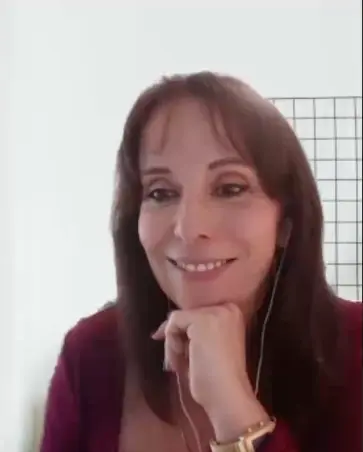 Telma Candeias, EMEA Head of Data Protection, Retail Broking, Howden - The AI Governance Gap
Governing AI “with the plane already flying”: tool approval is not use case approval, so build the inventory first and write the policy later.
Watch the recording →
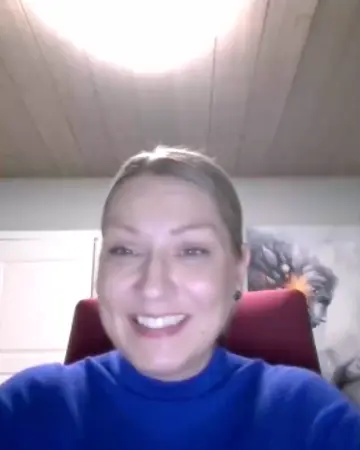 Katrin Vernik, Privacy, Data and AI Governance Manager, Telia - Privacy Is Not a PowerPoint
A documented process is not proof that systems follow it. Data discovery, classification and lineage close the gap.
Watch the recording →
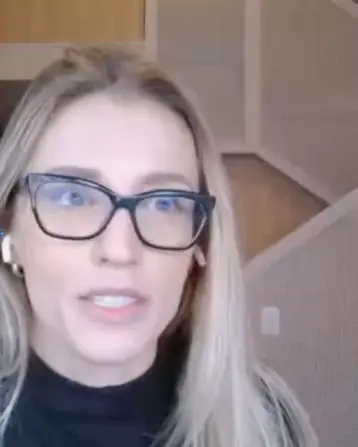 Fernanda Nones, AI & Privacy Expert - Governing the Autonomous Worker
AI agents act, not just answer. Give each one a named owner, its own identity and a kill switch that has actually been tested.
Watch the recording →
 Shane Patrick McNamee, Barrister and Digital Rights Advocate - Wrong Tools for the Job
Why privacy and AI governance tools disappoint, and how to buy one that fits: “Buy the tool, don’t let it buy you.”
Watch the recording →
 Alexander Hanff, Privacy Leader and Data Protection Strategist - Online Privacy: The State of Play
Published live: an audit of 100 major websites showing more than 518,000 privacy-affecting events with no consent given.
Watch the recording →
Day 2 - Wednesday 18 November #
 Koen Hostyn, DPO, Vlaanderen connect. - The Interplay Between NIS2 and GDPR
One security goal, two legal structures. Missing basic security controls can breach both NIS2 and GDPR Article 32.
Watch the recording →
 Tea Mustać, COO, SafePorter - Building Your AI Governance Stack
Carry, adapt, add: existing controls already cover most of AI governance. A policy is not a control.
Watch the recording →
 Audrey Barrett, DPO, SIPTU - A Little Help From My Friends: Life as a DPO
An honest talk about isolation and imposter syndrome, and why “it takes a network to defeat a network”.
Watch the recording →
 Rogelio Aguilar-Alamilla, Head of DPO Services, BNP Paribas Group - The Magnificent Data Subject
Pope Leo XIV’s encyclical on AI, read through a data protection lens: when speed clashes with dignity, dignity wins.
Watch the recording →
 Paula Hoffler, President, Irish Computer Society, and independent DPO - Who Protects the Protector?
Handling conflict and stress in the DPO role, and why every piece of formal advice needs a written record.
Watch the recording →
Day 3 - Thursday 19 November #
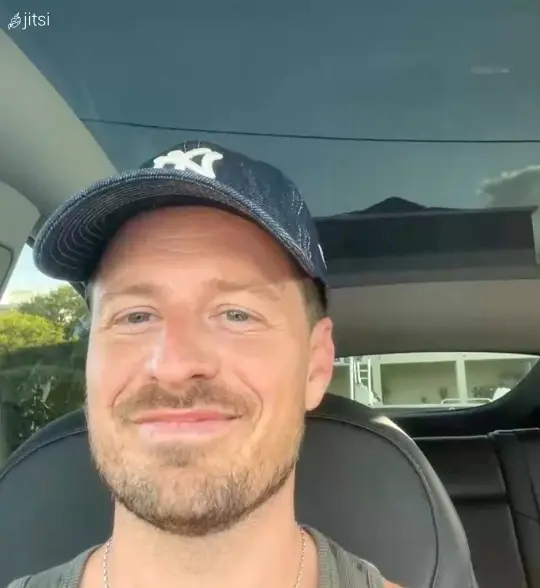 Nathan Kinch, AI Ethicist - How to Do AI Ethics When All You Have Is a Napkin
A hands-on workshop, run from his phone, showing that a meaningful ethical review takes 15-20 minutes.
Watch the recording →
 Olivia Roth, DPO and AI Protection Officer, Yves Rocher One - AI Governance in Practice
Three years of lessons: governance is an operating model, training is the biggest unlock and monitoring starts at go-live.
Watch the recording →
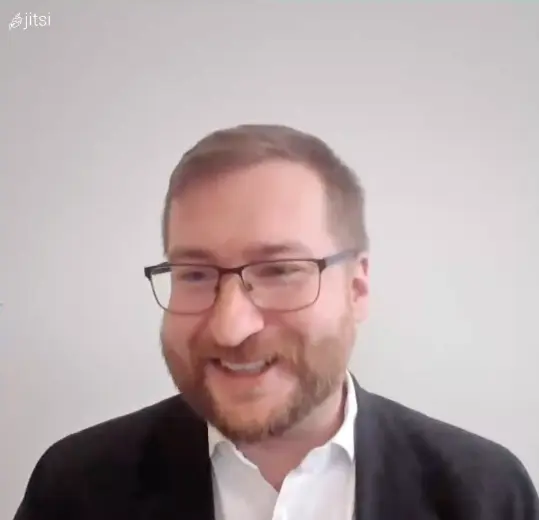 Eirik Randsborg Lie, DPO, Fagforbundet - When the Textbooks Don’t Match Reality
Leadership buy-in is a subscription, not a purchase. Get to usable, not perfect.
Watch the recording →
 Corné Purcell, DPO - Persecution to Protection
How documented abuses in Europe’s history shaped each data protection principle we work with today.
Watch the recording →
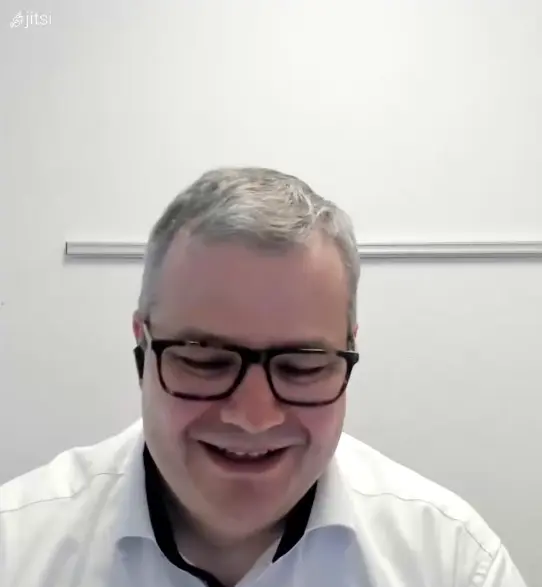 Marcell Olsen, CISO and Head of Enterprise Architecture, Ambu A/S - Enterprise Architecture and Information Security
Shape decisions early, while options are still open, instead of reviewing them once they are made.
Watch the recording →
What comes next #
Tell me what to change. The feedback form is short, optional and anonymous - no name, no email address. Five boxes: what I should start, stop, continue, do more of and do less of.
The next Field Talk is on 23-25 February 2027. Same format: free, online, practitioner-led and vendor-free. If you want to propose a talk, email me with a short description and a link to your LinkedIn profile.
6. What caught my eye #
Five things from the past two weeks worth your time.
The Commission proposes the EU Quantum Act - On 25 November, the Commission proposed the Quantum Act, alongside a new Sovereign Tech Equity Fund. It rests on three pillars: research, bringing quantum technology into use, and keeping systems and supply chains secure. The part for our world is post-quantum cryptography. The proposal would use public procurement to speed up the move to quantum-safe encryption. Data encrypted today can be harvested now and decrypted later, so this is an Article 32 conversation, not a science-fiction one. Parliament and Council still have to agree the text.
Italy fines Meta €805 million over Facebook’s camera roll suggestions - On 14 November, the Garante fined Meta for a Facebook for Android feature that reads the phone’s gallery to suggest photos and videos to post. Access came through one app-wide permission, preceded by a vague notice about enabling “other features”, and the feature was on by default. It is by far the largest fine the Garante has issued, and Meta says it will appeal. Katrin Vernik’s Field Talk line fits neatly: access is not permission.
Signal blocks AI agents from reading private chats - On 20 November, Signal started blocking screenshots by default on iOS and Android to stop AI agents built into the operating system from reading chats off the screen. Meredith Whittaker called these agents an existential threat to Signal and admitted the protection is incomplete, so Signal is asking Apple, Google and Microsoft for proper controls. It followed a Reuters investigation in which Meta’s Muse agent pulled Signal message text through Android notification permissions. End-to-end encryption does not help if something is reading over your shoulder. If you watched Fernanda Nones’s session, none of this will surprise you.
NHS trusts record more than 3,000 cases of staff snooping in patient records - Freedom of Information requests to 143 hospital and ambulance trusts in England found 3,029 incidents of staff inappropriately accessing patient records over five years - and only 79 trusts gave precise figures. NHS England now expects anyone suspected of snooping to be suspended and lose system access straight away. Role-based access is only half the control. The other half is someone actually reviewing the access logs.
The Digital Omnibus, one year on - The Commission published its Digital Omnibus proposal on 19 November 2025. A year later, none of the GDPR changes is law. The Council agreed its negotiating mandate on 21 October, dropping the plan to move cookie rules into the GDPR and restoring the right not to be subject to purely automated decisions. Parliament has not adopted a position, and talks between the institutions cannot start until it does. Until then the GDPR applies as written, including the 72-hour breach clock.
Hire me #
I work with organisations as an external data protection and GRC consultant - on GDPR programmes, risk and compliance frameworks, DPIAs, training, and wherever the gap between policy and practice needs closing. I am also available to speak and to consult specifically on how to make data protection by design something your product teams actually do, rather than something they sign off on. If that sounds useful, write to me or book time directly.
7. Running it myself #
How Field Talk ran on open-source software #
I promised that this part would cover Ubuntu Server. I am taking a short detour first, because Field Talk is the best example I have of what self-hosting makes possible. A three-day conference for around 550 people, with no Zoom, no YouTube, no Eventbrite and no Mailchimp. Keeping Big Tech to a minimum, and collecting as little data as possible, helped the conference succeed - fewer moving parts, fewer accounts, less to go wrong and less to protect. Here is what it ran on.
The website. fieldtalk.eu is a static site. No database, no plugins, nothing to patch on the web server beyond the web server itself. It is hosted on a small virtual server at Hetzner in Germany.
Registration. Listmonk, an open-source mailing list manager, running on a Linux mini PC in my home office. Email address only, name optional, one list per day, double opt-in. Listmonk also sent the morning reminders with the day’s link. The registration lists are deleted on 31 January 2027.
The speakers. Each speaker joined a self-hosted Jitsi Meet room, one room per day. Jitsi is the open-source video meeting software that many public bodies in Europe already use. Nobody needed an account or an app, just a browser.
The broadcast. OBS Studio on my Mac took the Jitsi room, added the lower thirds and holding slides, and sent the result to Owncast - an open-source, self-hosted alternative to Twitch or YouTube Live. Viewers needed no account. For the conference itself I rented a dedicated server in Hetzner’s Helsinki data centre with four dedicated CPU cores, used it for about ten days and deleted it afterwards. Transcoding a live stream is the one job that needs real CPU, and I did not want it competing with anything else. The whole event used a small fraction of the server’s included bandwidth.
The recordings. OBS recorded each day locally. I cut each day’s recording into the individual talks with LosslessCut, which trims video without re-encoding it - quick, efficient and with no loss of quality. The fifteen talks now live on PeerTube, the open-source video platform, and are embedded on the site with peer-to-peer sharing switched off. Nothing loads from the video server until you press play. The speakers’ slides had their document metadata stripped with Stirling PDF before publication.
The certificates. The CPD form posts to an n8n workflow - open-source automation - which checks the request, builds the certificate as a PDF with Gotenberg and emails it. No third-party form service sees your name.
The plumbing. CrowdSec blocks known bad actors, Wazuh watches the logs, and Uptime Kuma tells me when something stops answering.
The backups. Everything is backed up every day to backup servers in Germany. That is not a theoretical safeguard. Over the past year I have had one or two incidents that needed me to restore from those backups, and each time the restore did its job. A backup you have never restored from is a hope, not a control.
Not everything went to plan. One speaker’s home network failed minutes before his session, so I filled the gap with an impromptu history of data subject rights. Another joined from his phone in his car on the beach at the Gold Coast, Australia. And a mail provider slowed my post-event email to a crawl until I turned the sending speed down. None of that had anything to do with self-hosting. Live events are like that whatever they run on.
At the end of the conference, someone said it must have cost me an absolute fortune. So I worked it out. The extra streaming server cost just €23 for the short time I rented it. Everything else is what I already use every day, so there was no additional cost - apart from my time. One person even offered to make a financial contribution, which I politely declined.
It did get me thinking, though. If people would be willing to pay a small amount, perhaps that goodwill could go somewhere useful. For the next Field Talk I am considering a good cause that people can contribute to voluntarily if they want to - a charity or some kind of movement. Attendance will stay free either way. If you have ideas, email me.
Is this for everyone? No. It took months of evenings and a lot of testing. But none of the pieces is exotic, all of them are free to use, and each one can be learned on its own - starting, as I said last time, with an old laptop. In the next issue: Ubuntu Server, as promised.